Water Extraction and Structural Drying in Niagara Falls
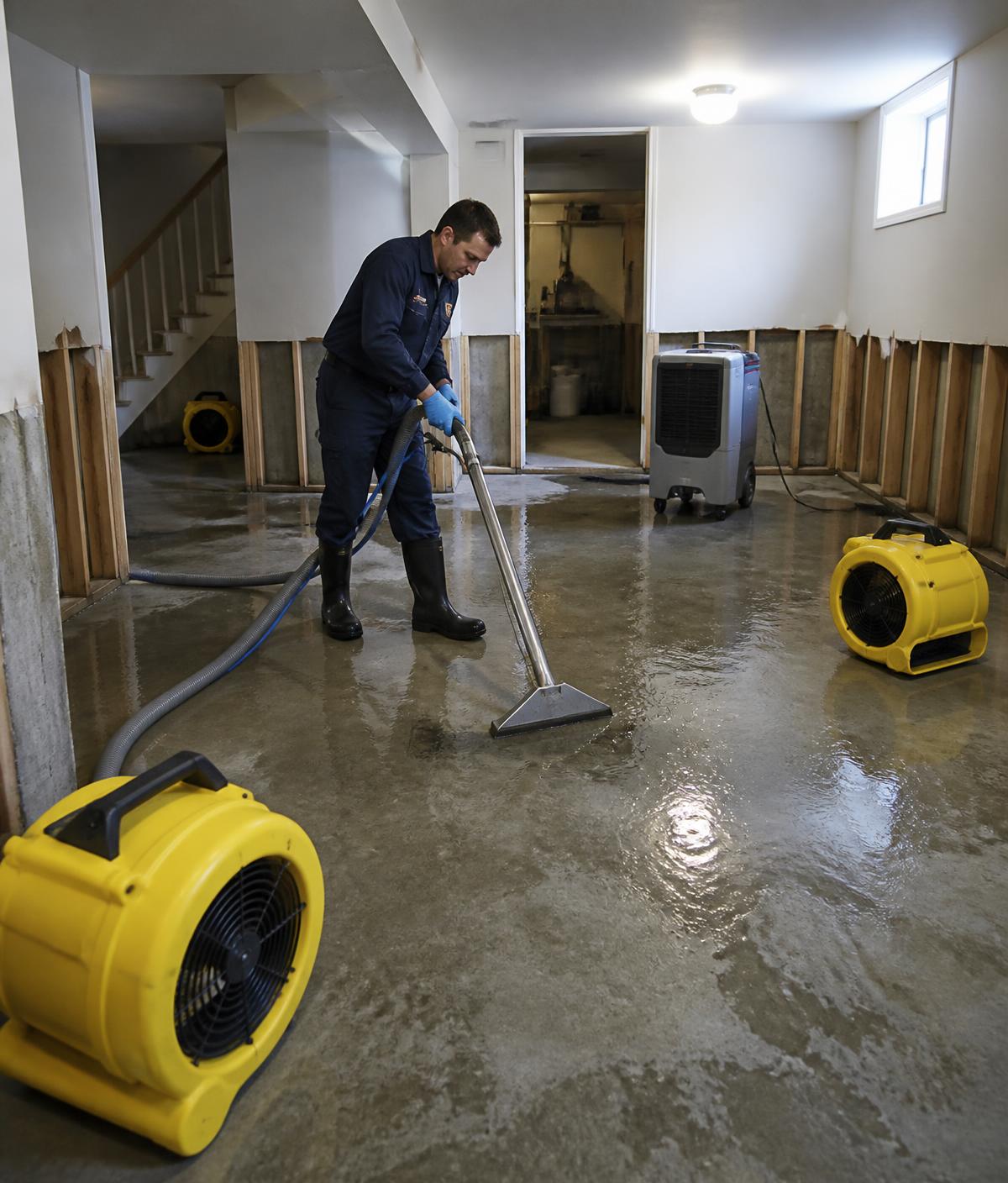
Extraction removes the water you can see. Structural drying removes what remains inside the building materials, which is the part that determines whether a property is genuinely dry.
Common causes
- Any water intrusion that saturates flooring or wall assemblies
- Slow leaks discovered after materials absorbed moisture
- Post-flood residual moisture in framing and concrete
- Wet insulation trapped inside a wall cavity
Warning signs
- Floors that still read wet after surface water is gone
- Condensation on windows in an affected room
- Cool, damp walls at the base of an assembly
- Odours that return once fans are shut off
Inspection and restoration process
- 1
Extraction of free water from flooring and cavities
- 2
Baseline moisture readings on affected materials
- 3
Airflow design with air movers directed along wet surfaces
- 4
Dehumidification to pull moisture out of the air
- 5
Daily readings until materials reach a dry standard
The exact sequence depends on the water source, the affected materials and the extent of the damage at your property.
Materials commonly affected
- Subfloor and joist framing
- Concrete slab and block walls
- Drywall and cavity insulation
- Hardwood and laminate assemblies
Why prompt action matters
- Air movement alone does not dry a structure without dehumidification.
- Undried cavities can create secondary damage behind new finishes.
- Consistent monitoring shows whether drying is actually progressing.
Frequently asked questions
It varies with material, saturation and airflow. Progress is tracked with readings rather than a fixed timeline.
Contact
Water Extraction and Structural Drying in Niagara Falls
Describe the affected areas and we will arrange an assessment of the property.
Water Damage Niagara
5108 McRae St, Niagara Falls, ON L2E 1P5