Emergency Water Damage Restoration in Niagara Falls
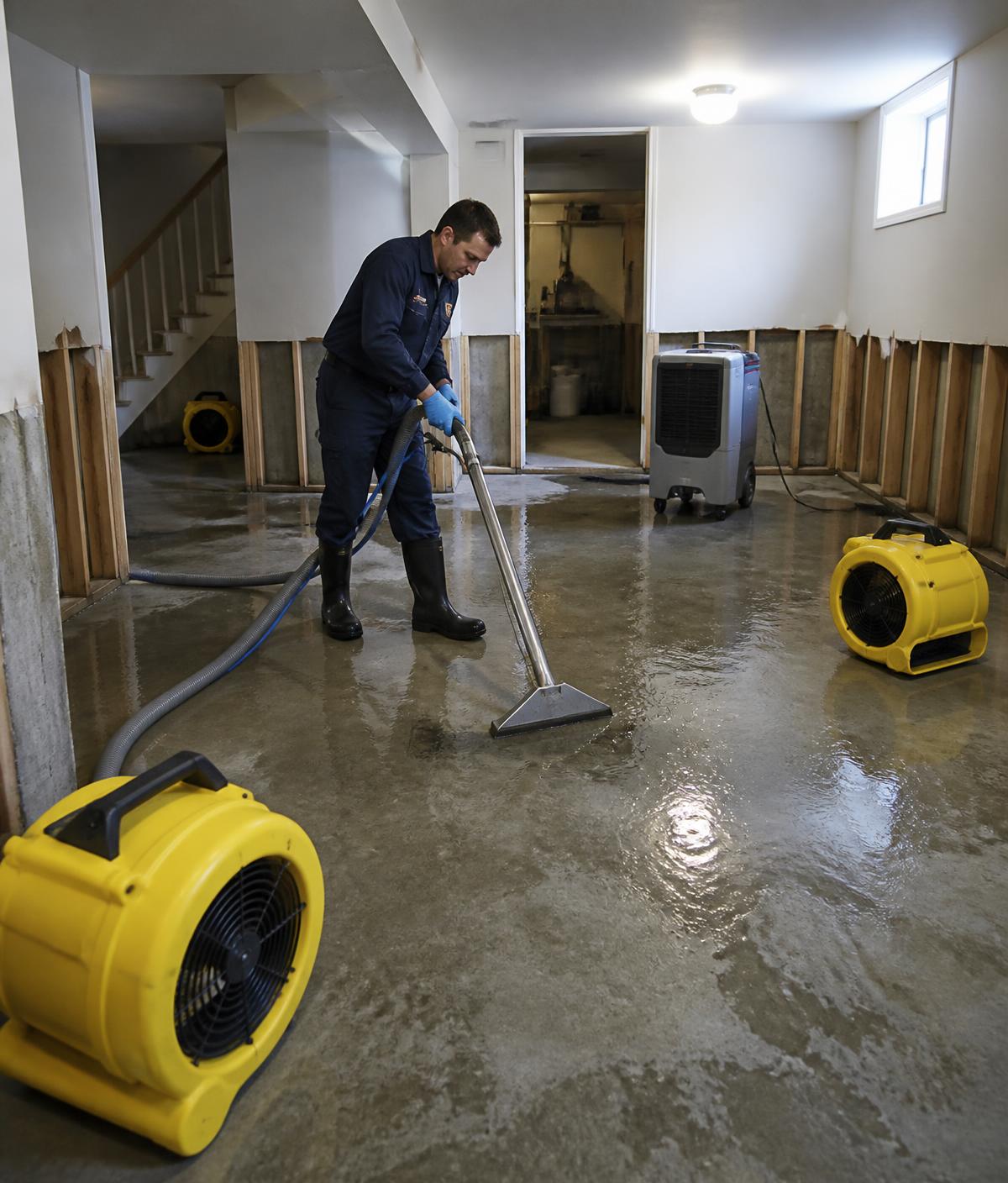
When water is still moving through a property, the order of work matters. We begin with a walkthrough of the affected areas, confirm where the water originated, and start removing standing water before it soaks further into building materials.
Common causes
- Supply lines and shut-off valves that fail without warning
- Sump pump failure during heavy Niagara rainfall
- Water heater tanks and connections that let go
- Overflowing fixtures left unattended
Warning signs
- Water pooling across floors or running down walls
- Ceiling bulges, stains or active dripping
- Circuit or appliance issues near wet areas
- A sudden musty smell in an enclosed space
Inspection and restoration process
- 1
Walkthrough of every affected room and adjacent space
- 2
Identifying and controlling the water source where safely possible
- 3
Extraction of standing water from floors and cavities
- 4
Moisture mapping with meters and thermal imaging
- 5
Placement of air movers and dehumidifiers with monitored readings
The exact sequence depends on the water source, the affected materials and the extent of the damage at your property.
Materials commonly affected
- Drywall, baseboards and insulation
- Subfloor, underlay and finished flooring
- Cabinetry kick spaces and millwork
- Framing lumber and concrete slab surfaces
Why prompt action matters
- Water continues to wick into porous materials for as long as it sits.
- Wet organic materials can begin supporting mould growth within days.
- Delays usually expand the amount of material that must be removed.
Frequently asked questions
If it is safe, shut off the water supply, avoid standing water near electrical outlets or panels, and move contents out of the affected area.
Contact
Emergency Water Damage Restoration in Niagara Falls
Describe the affected areas and we will arrange an assessment of the property.
Water Damage Niagara
5108 McRae St, Niagara Falls, ON L2E 1P5